
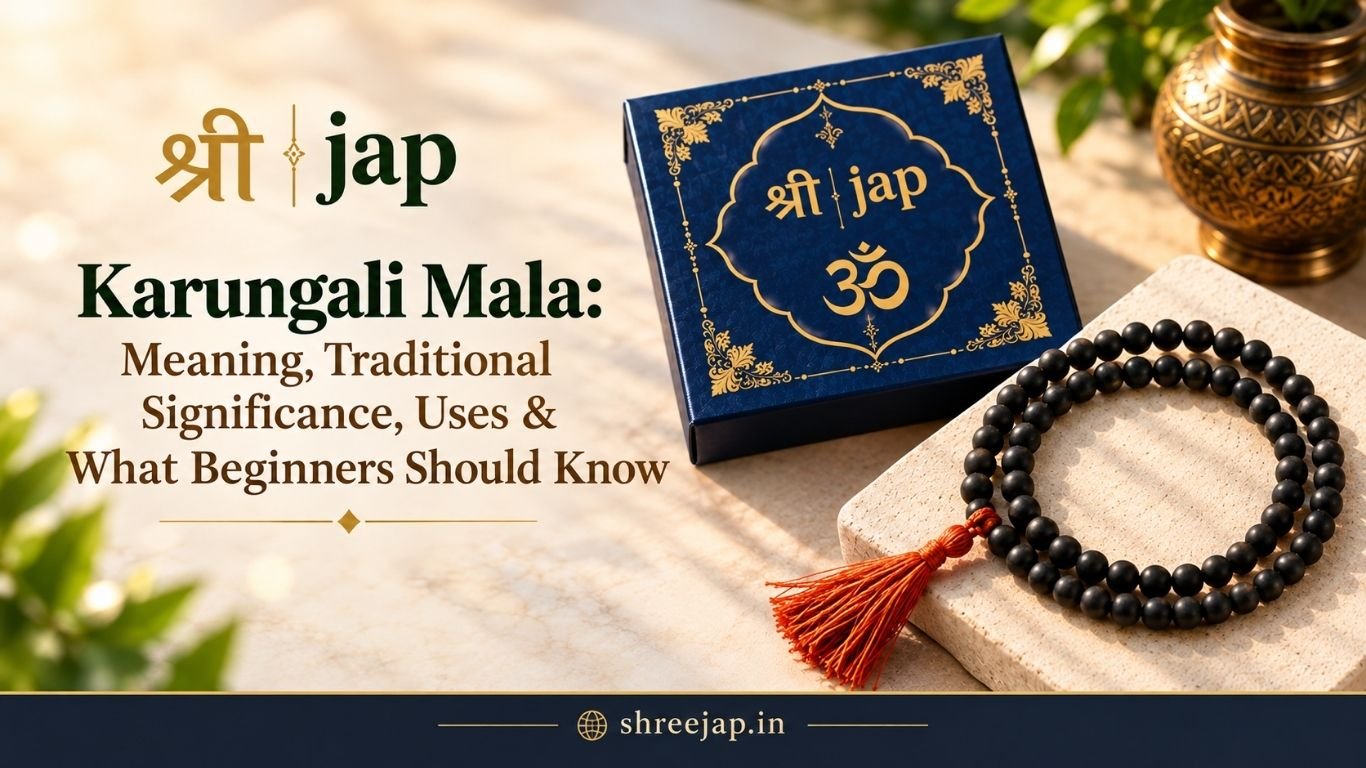
Karungali Mala: Meaning, Traditional Significance, Uses & What Beginners Should Know
Seen a black wooden mala everywhere and not sure what it is, what it’s for, or whether the one you’re buying is real. This guide covers the meaning, benefits, uses, and exactly how to start.
Karungali mala is a 108-bead rosary made from dense black ebony wood, used in South Indian Hindu traditions for japa, meditation, and spiritual protection. This guide explains its meaning, uses, and how beginners can choose, start, and care for one.
What Is Karungali Mala?
Karungali is the Tamil name for ebony, drawn from “karu” meaning black, and refers to the dense, dark heartwood of Diospyros trees. As a mala, it is a string of usually 108 beads used to count mantra repetitions during japa.
Most malas include one extra guru bead that marks where a round begins and ends. Common sizes are 8mm (daily wear) and 10mm (longer meditation sessions).
Traditional Significance & Benefits
Karungali mala is traditionally believed to protect against the evil eye, calm fear, and support Shiva worship, while practically improving focus and routine. The spiritual benefits are faith-based, and the practical ones come from mindful repetition rather than any proven property of the wood.
Traditional benefits (faith-based):
- Protection from the evil eye (nazar) and negative energy
- Calmness during fear, stress, and restlessness
- Confidence and courage, linked to the wood’s dark, heavy character
- Shiva worship support, especially with Om Namah Shivaya
- Planetary balance, sometimes worn for Saturn (Shani) or Rahu; consult a trusted astrologer first
- Stability and prosperity, believed to support steady progress
Practical benefits (no belief required):
- Sharper focus, since counting beads keeps the mind from wandering
- Habit building, because a physical object makes daily practice easier to keep
- Mindful reminders to pause and breathe during a busy day
- Durability, as ebony is dense and long-lasting with proper care
There is no scientific evidence that karungali cures ailments or changes luck. Be wary of sellers who promise guaranteed results.
Uses & How Beginners Should Start
Most beginners and experienced practitioners use karungali mala for japa (mantra repetition), meditation, and daily wear as a protective bracelet or necklace. Its weight and cool, smooth feel make it a practical focus tool for steady, mindful repetition during long, quiet sessions.
A simple starter workflow:
- Pick one mantra your family or teacher recommends.
- Cleanse the mala with a clean, dry cloth and place it before your deity if you wish.
- Sit comfortably, holding the mala in your right hand over the middle finger.
- Start at the guru bead and move one bead per chant with your thumb.
- Stop at the guru bead after 108 repetitions. Reverse direction instead of crossing over it.
- Stay consistent. Ten minutes daily beats an hour once a month.
Care tip: Remove it before bathing, heavy exercise, or applying perfume, as water and oils dull the wood and weaken the thread.
How to Spot a Genuine Karungali Mala
Genuine karungali is heavy, dense, and fine-grained, but price and weight alone cannot prove authenticity. Look for transparent sellers, a specified wood, lab certification where offered, and clear, written return policies rather than relying on unreliable, potentially damaging home tests.
- Natural variation in tone and grain between beads is normal
- Clear listings state the wood type, bead size, and count
- Realistic pricing, since unusually cheap “ebony” often isn’t
About Shreejap
Ready to begin your practice? Shreejap is a place to explore spiritual essentials for japa, puja, and daily devotion. Whether you’re picking up your first mala or building a routine, browse the collection at ShreeJap.
Discover spiritual accessories that connect with your personal beliefs and daily practices. Take your time exploring options, learn their traditional significance, and choose pieces that best suit your devotional journey.
FAQ
Can anyone wear a Karungali Mala?
Yes. Traditionally, people of any age or gender wear it. Follow your family’s customs if they have specific rules.
How do I “energize” a Karungali Mala?
Practices vary by tradition. A common method is cleaning the mala, placing it before your deity, and chanting your mantra 108 times to begin.
Can I wear it every day?
Yes, but keep it away from water, perfume, and sweat. Store it in a clean cloth pouch when not in use.

Add comment
You must be logged in to post a comment.