

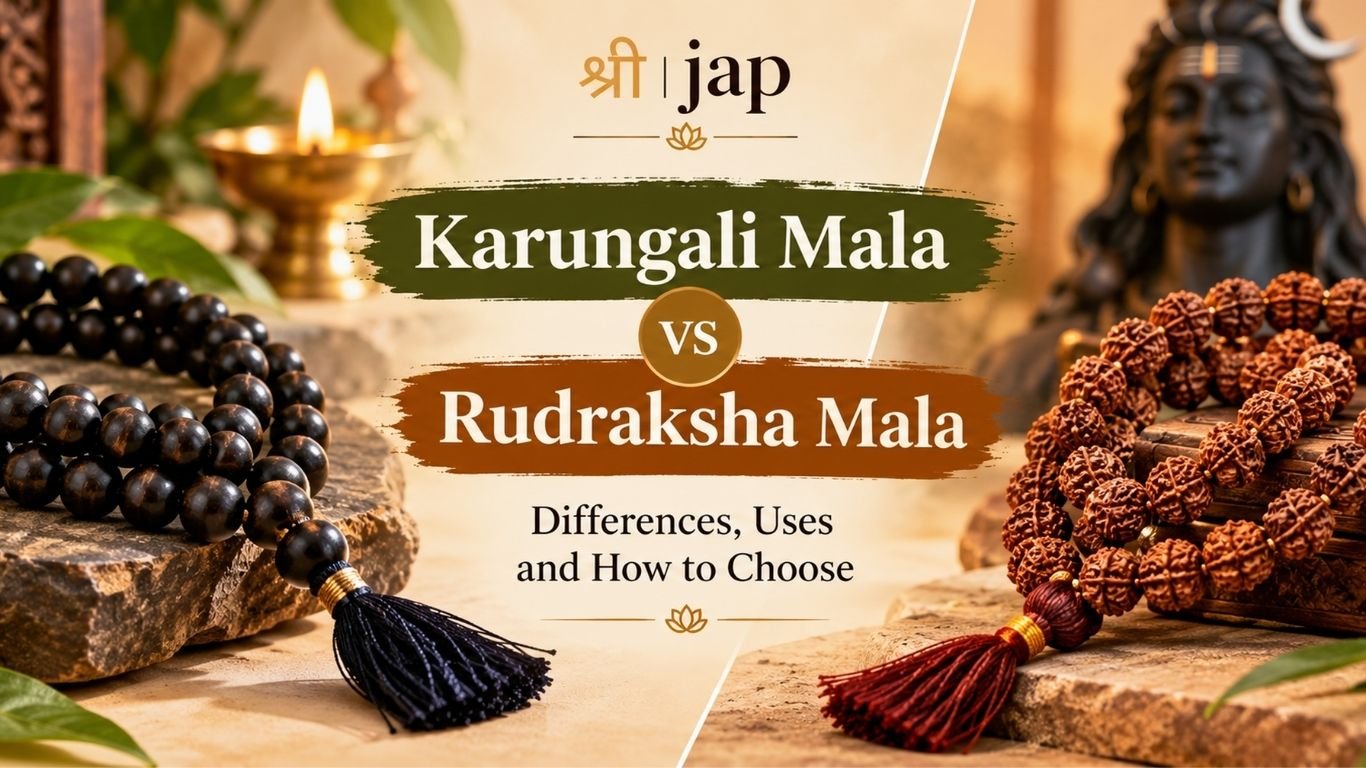
Karungali Mala vs Rudraksha Mala: Differences, Uses and How to Choose
Choosing between a Karungali Mala and a Rudraksha Mala can be confusing, especially if you are looking for a spiritual accessory for daily prayer, meditation, or personal devotion. Both have a place in Indian spiritual traditions, but they differ in their material, appearance, traditional associations, and care requirements.
A Karungali Mala is traditionally made from dark ebony wood, while a Rudraksha Mala is made from the dried seeds of the Rudraksha tree. The right choice depends on your personal beliefs, intended use, preferred appearance, and how you plan to use or wear the mala.
In this guide, we will compare Karungali Mala vs Rudraksha Mala, explain their traditional significance, and help you choose the option that best suits your spiritual practice.
What Is a Karungali Mala?
A Karungali Mala is traditionally made from Karungali wood, commonly associated with ebony varieties. The word Karungali is used particularly in Tamil traditions, where the wood is valued for its dark colour and traditional significance.
Karungali malas usually feature dark brown or nearly black beads with a smooth, polished appearance. Their understated look makes them suitable for people who prefer simple, traditional spiritual accessories.
Traditional significance of Karungali Mala
Karungali wood is associated with devotional practices and traditional beliefs in certain communities. Some people choose Karungali malas because of their cultural significance, personal faith, or connection with spiritual routines.
Depending on regional customs, Karungali beads may also be associated with traditional ideas of protection and positive energy. These are matters of belief rather than scientifically established effects.
Common reasons people choose Karungali Mala
- Its dark, distinctive appearance.
- Its association with traditional spiritual practices.
- Its simple and understated design.
- Its suitability as a personal devotional accessory.
- Its appeal to people who prefer wooden beads.
Before purchasing, check the wood description, bead size, finish, and seller’s material information to ensure the mala matches your expectations.
What Is a Rudraksha Mala?
A Rudraksha Mala is made from the dried seeds of trees belonging to the Elaeocarpus genus, particularly Elaeocarpus ganitrus. Rudraksha has a long-standing association with Lord Shiva and is widely used in Hindu devotional practices.
Rudraksha beads are recognisable by their natural surface and distinctive lines or divisions, traditionally called mukhis. The number and appearance of these divisions vary from bead to bead.
Traditional significance of Rudraksha Mala
Rudraksha malas are commonly used for mantra chanting, japa, meditation, and prayer. Many devotees associate Rudraksha with Lord Shiva and use it as part of their daily spiritual discipline.
Different mukhi Rudraksha beads have specific meanings in traditional religious literature and regional practices. Buyers should understand that these interpretations belong to spiritual traditions and should not be treated as guarantees of particular results.
Common reasons people choose Rudraksha Mala
- Its traditional association with Lord Shiva.
- Its use in mantra chanting and japa.
- Its distinctive natural bead texture.
- Its importance in many Hindu devotional traditions.
- Its suitability for people who want a mala for regular prayer or meditation.
When buying a Rudraksha Mala, examine the bead quality, size, condition, stringing, and available information about its origin.
Karungali Mala vs Rudraksha Mala: Key Differences
Although both malas are used in spiritual settings, their most important difference is the material from which their beads are made.
| Feature | Karungali Mala | Rudraksha Mala |
|---|---|---|
| Material | Traditionally dark ebony wood | Dried Rudraksha seeds |
| Appearance | Usually smooth, dark, and polished | Textured, naturally grooved beads |
| Traditional association | Regional devotional traditions involving Karungali wood | Strong association with Lord Shiva |
| Common use | Personal devotion and spiritual wear | Japa, mantra chanting, meditation, and devotional wear |
| Bead characteristics | Wood grain, finish, colour, and shape | Natural surface and mukhi divisions |
| Care | Protect from excess moisture and harsh chemicals | Protect from prolonged moisture and harsh chemicals |
| Best suited to | Those who prefer dark wooden beads and their traditional associations | Those who prefer Rudraksha’s devotional significance and natural texture |
Important: Neither mala is universally better than the other. Their suitability depends on your intended use, personal preferences, and the traditions you follow.
Karungali Mala vs Rudraksha Mala: Which Is Better for Daily Wear?
If you want to wear a mala throughout the day, consider comfort, bead size, construction, and your daily activities.
Choose Karungali Mala if:
- You prefer a dark, understated wooden design.
- You like the traditional significance associated with Karungali wood.
- You want a mala that complements simple everyday clothing.
- You prefer the appearance of smooth, polished beads.
Choose Rudraksha Mala if:
- You feel connected to Lord Shiva’s devotional traditions.
- You want a mala for mantra chanting or regular prayer.
- You appreciate naturally textured beads.
- You prefer a spiritual accessory traditionally associated with japa and meditation.
For either option, check whether the mala is designed for wearing or for chanting. A mala intended for japa may have a different length or construction from a bracelet or necklace.
There is no universal rule that one type must be worn every day. Follow the guidance of your own tradition or spiritual teacher if you observe specific practices.
Which Mala Is Better for Japa and Meditation?
For mantra chanting and meditation, Rudraksha Mala is a familiar choice in many Hindu devotional traditions, especially among devotees of Lord Shiva. It is commonly used to count repetitions of a mantra and maintain focus during japa.
Karungali Mala may also appeal to people who incorporate wooden beads into their devotional routines. Its suitability depends on the practices and preferences they follow.
When selecting a mala for japa, consider these practical points:
Bead count: A 108-bead mala is widely used for traditional japa, although other bead counts are also available.
Comfort: Choose beads that are comfortable to handle repeatedly.
Construction: Check the string, knots, and overall durability.
Intended practice: Make sure the mala suits your chosen form of prayer or meditation.
Personal tradition: Follow any specific instructions associated with your mantra or devotional practice.
The main purpose of a japa mala is to support concentration and consistency. The quality of your practice depends on your attention and discipline, not simply on the type of beads you use.
Karungali Mala vs Rudraksha Mala: Which Should Beginners Choose?
If you are new to spiritual practices, start by identifying why you want a mala.
- For mantra chanting: Consider a Rudraksha Mala if you want to follow a traditional practice commonly associated with Lord Shiva.
- For a dark wooden design: A Karungali Mala may be a suitable choice if you prefer its appearance and traditional associations.
- For daily wear: Compare bead size, weight, length, finish, and comfort before deciding.
- For gifting: Consider the recipient’s religious traditions, personal preferences, and whether they would prefer a mala for wearing or chanting.
- For a regular meditation routine: Choose a comfortable mala that you can use consistently without unnecessary distractions.
You do not need to buy an expensive mala to begin a spiritual routine. Focus on suitable materials, reliable product information, comfortable construction, and your own devotional intentions.
How to Identify a Quality Karungali or Rudraksha Mala
Before buying either type of mala online, pay attention to the following details.
1. Check the material description
For Karungali Mala, look for clear information about the wood used. For Rudraksha Mala, check whether the beads are described as natural Rudraksha seeds and whether the seller provides relevant sourcing details.
2. Examine the beads
Look at the photographs for consistency, visible defects, finish, and overall construction. Natural beads can vary in colour, shape, and texture, so perfectly identical beads are not always expected.
3. Check the bead size and count
Product listings should provide useful measurements and, where relevant, the number of beads. This helps you determine whether the mala suits your intended use.
4. Review the construction
Inspect the thread, knots, clasp, or other fastening details. A well-constructed mala should be suitable for its intended use.
5. Buy from a seller that provides clear information
Choose a seller that describes the material, dimensions, care instructions, and product specifications transparently. Be cautious of claims that promise guaranteed wealth, health benefits, protection, or life changes from wearing a particular mala.
At ShreeJap, explore the available spiritual accessories and review the individual product descriptions to find an option that suits your preferences.
How to Care for Karungali Mala and Rudraksha Mala
Proper care helps maintain the appearance and condition of your mala.
Karungali Mala care
- Keep the wooden beads away from prolonged exposure to water.
- Avoid harsh cleaning chemicals and perfumes.
- Wipe gently with a soft, dry cloth.
- Store in a clean, dry place when not in use.
- Follow any specific care instructions supplied with the product.
Rudraksha Mala care
- Avoid soaking the beads in water for long periods.
- Keep the mala away from harsh chemicals and unnecessary moisture.
- Clean gently with a soft cloth or follow the seller’s recommended method.
- Check the thread and knots periodically.
- Store it in a clean, dry place away from direct heat.
Care requirements can vary with the finish, stringing material, and other components. Follow the instructions provided for your specific mala.
Frequently Asked Questions
1. What is the main difference between Karungali Mala and Rudraksha Mala?
Karungali Mala is traditionally made from dark ebony wood, while Rudraksha Mala is made from dried seeds of Rudraksha trees. They differ in appearance, material, and traditional associations.
2. Is Karungali Mala better than Rudraksha Mala?
Neither is universally better. Karungali Mala may appeal to people who prefer dark wooden beads, while Rudraksha Mala is widely associated with Lord Shiva and mantra chanting. Your intended use and personal beliefs should guide your decision.
3. Can I use Rudraksha Mala for daily mantra chanting?
Yes. Rudraksha Mala is commonly used for daily japa and mantra chanting in Hindu devotional traditions. Choose a comfortable mala and follow the customary guidance associated with your practice.
4. Can I wear Karungali Mala every day?
Many people choose to wear Karungali Mala as a daily spiritual accessory. Check the product’s construction and care instructions, and follow any relevant guidance from your own tradition.
5. Can I wear Karungali Mala and Rudraksha Mala together?
Practices vary across traditions and individual beliefs. Some people may choose to wear both, while others follow specific customs. If you observe a particular religious practice, consult a knowledgeable guide within that tradition.
6. How many beads should a japa mala have?
A 108-bead mala is commonly used for mantra chanting in Hindu traditions. Other counts are also available, depending on the intended practice and design.
7. How can I identify an original Rudraksha Mala?
Check the seller’s material description, sourcing information, bead characteristics, and available verification details. Appearance alone may not establish authenticity, so avoid relying on unverified home tests or unsupported guarantees.
8. Which mala makes a better spiritual gift?
Both can be thoughtful gifts. Choose according to the recipient’s preferences, devotional practices, and intended use. A clear product description and suitable packaging can also make the gift more meaningful.
Final Thoughts: Choosing Between Karungali Mala and Rudraksha Mala
The choice between Karungali Mala and Rudraksha Mala comes down to material, appearance, traditional significance, and intended use.
Karungali Mala is an option for people who appreciate dark wooden beads and their regional devotional associations. Rudraksha Mala is a familiar choice for devotees who want a mala associated with Lord Shiva and traditional japa practices.
Rather than choosing solely on claims about benefits, compare the product specifications, comfort, construction, and care requirements. The best mala is one that suits your practice and encourages a meaningful, consistent spiritual routine.
Explore ShreeJap’s available malas and spiritual accessories to find an option that aligns with your preferences and devotional journey.


Add comment