

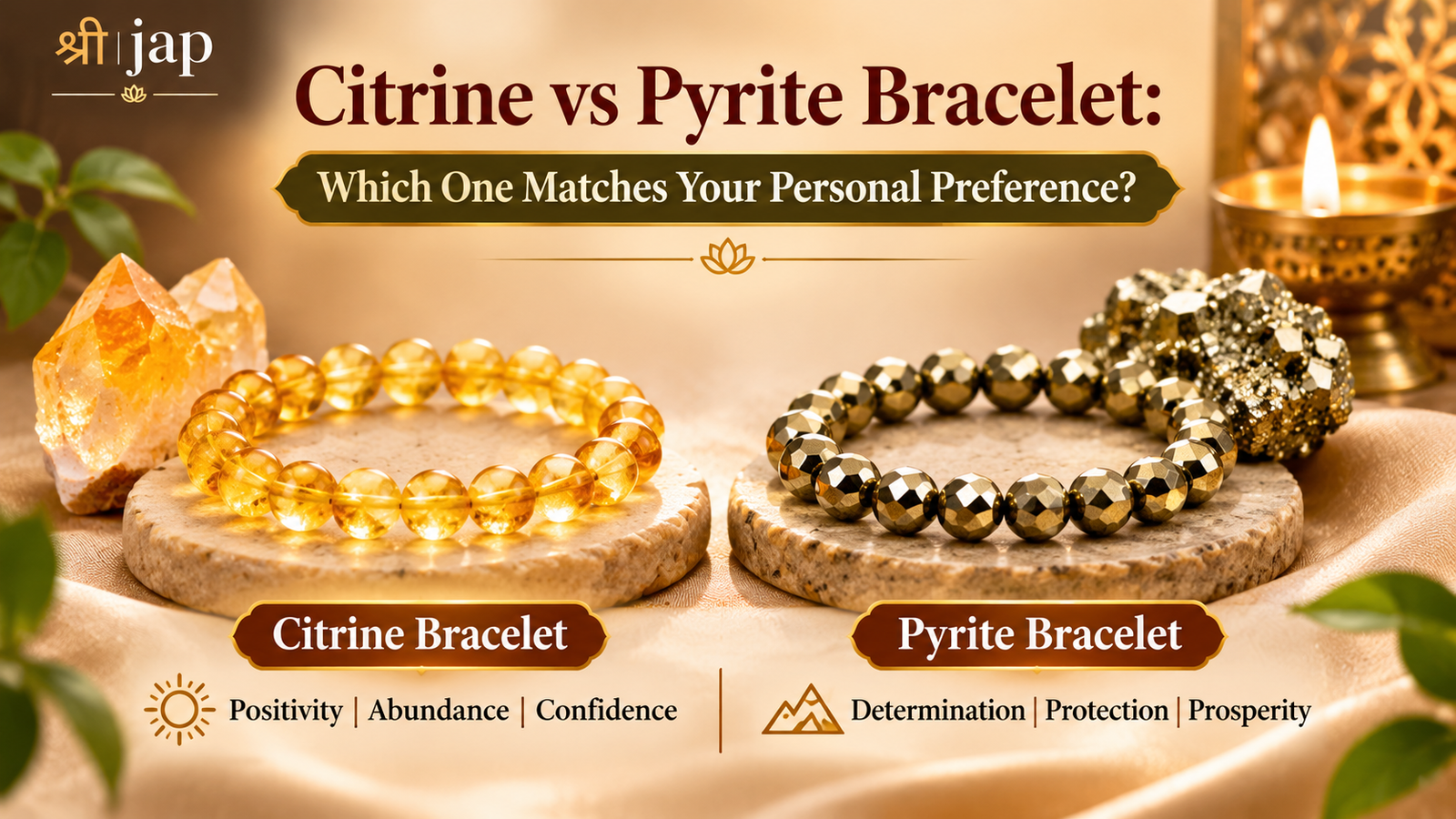
Citrine vs Pyrite Bracelet: Which One Matches Your Personal Preference?
Crystal bracelets are popular among people who appreciate natural stones, meaningful jewellery and spiritual traditions. Among the many options available, Citrine and Pyrite bracelets are particularly well-known for their golden appearance and traditional association with prosperity, confidence and abundance.
Although both stones share warm golden tones, they have different appearances, textures and symbolic meanings. So, if you are considering adding one to your collection, understanding the differences can help you make a more suitable choice.
In this guide, we compare Citrine and Pyrite bracelets based on their appearance, traditional significance, styling, maintenance and everyday wear.
1. What Is a Citrine Bracelet?
Citrine is a variety of quartz known for its beautiful yellow-to-golden colour. Its shades can range from pale lemon yellow to deep honey and amber.
In crystal traditions, Citrine is often associated with positivity, confidence, creativity and abundance. It is sometimes called the Merchant’s Stone because of its traditional connection with prosperity and business success.
A Citrine bracelet is a lovely option for people who appreciate warm colours and prefer jewellery with a bright, elegant appearance.
Why people choose Citrine:
- Its cheerful yellow and golden shades.
- Its traditional association with positivity and abundance.
- Its versatile appearance for casual and festive outfits.
- Its smooth, polished finish in many bracelet designs.
- Its popularity as a thoughtful spiritual gift.
2. What Is a Pyrite Bracelet?
Pyrite is a naturally occurring mineral with a metallic golden appearance. It is often recognised by its shiny, brassy surface, which gives it an appearance similar to gold.
In spiritual and crystal traditions, Pyrite is commonly associated with confidence, determination, protection and prosperity. Its bold appearance also makes it a distinctive choice for people who prefer statement jewellery.
Unlike the transparent or translucent appearance of some Citrine stones, Pyrite has an opaque, metallic finish.
Why people choose Pyrite:
- Its distinctive metallic golden appearance.
- Its traditional association with confidence and determination.
- Its bold and structured visual appeal.
- Its popularity in prosperity-themed crystal collections.
- Its unique look compared with conventional gemstone bracelets.
3. Citrine vs Pyrite Bracelet: Key Differences
Both stones have a golden appearance, but their visual characteristics and traditional associations are different.
| Feature | Citrine Bracelet | Pyrite Bracelet |
|---|---|---|
| Material | Quartz variety | Iron sulphide mineral |
| Appearance | Transparent to translucent | Opaque and metallic |
| Colour | Lemon yellow to honey gold | Brassy or metallic gold |
| Traditional associations | Positivity, abundance and confidence | Determination, protection and prosperity |
| Visual style | Bright, warm and elegant | Bold, metallic and distinctive |
| Jewellery appeal | Soft and refined | Strong and statement-making |
The best choice depends on whether you prefer Citrine’s warm gemstone appearance or Pyrite’s metallic finish.
4. Traditional Meaning of Citrine and Pyrite
Both crystals have symbolic meanings in modern crystal traditions, although these associations are based on spiritual beliefs rather than scientifically established effects.
Citrine: Positivity and Abundance
Citrine is traditionally connected with optimism, motivation and prosperity. Many crystal enthusiasts appreciate it as a symbolic reminder to maintain a positive outlook and stay focused on personal goals.
Its sunny colour also makes it a popular choice for people who enjoy warm, uplifting gemstone jewellery.
Pyrite: Confidence and Determination
Pyrite is often associated with strength, ambition and determination. Its golden metallic appearance has contributed to its connection with wealth and prosperity in crystal traditions.
People who appreciate its symbolism may choose it as a personal reminder to remain confident and committed to their ambitions.
5. Which Bracelet Is Better for Everyday Wear?
Both Citrine and Pyrite bracelets can complement everyday outfits, but their care requirements are different.
Citrine Bracelet
Citrine is a relatively durable gemstone, making it suitable for regular jewellery use with reasonable care. Avoid prolonged exposure to harsh chemicals, extreme temperatures and direct sunlight for extended periods.
Pyrite Bracelet
Pyrite requires more careful handling because it can react with moisture and humidity. Avoid wearing it while bathing, swimming or exercising. Keep it dry and store it separately in a clean, dry place.
If you prefer low-maintenance jewellery, Citrine may be the more convenient option.
6. How to Choose Between Citrine and Pyrite
Before choosing a bracelet, consider your personal style, preferences and how you plan to wear it.
Choose Citrine if you:
- Prefer bright yellow and honey-golden gemstones.
- Like elegant, polished jewellery.
- Appreciate its traditional association with positivity and abundance.
- Want a versatile bracelet for everyday styling.
- Are looking for a meaningful gift with a warm appearance.
Choose Pyrite if you:
- Prefer metallic golden jewellery.
- Like distinctive and bold accessories.
- Appreciate its traditional association with confidence and determination.
- Enjoy unique natural mineral textures.
- Are comfortable following its additional care requirements.
Neither bracelet is universally better. Your personal preference and lifestyle should guide your decision.
7. Can You Wear Citrine and Pyrite Bracelets Together?
Yes, Citrine and Pyrite bracelets can be worn together as a jewellery combination.
Their golden shades complement each other, while their different finishes create visual contrast. Citrine adds a warm, polished appearance, whereas Pyrite contributes a metallic accent.
If you enjoy combining gemstones, you can also wear them on separate wrists or pair them with simple gold-toned accessories.
From a spiritual perspective, some crystal enthusiasts enjoy combining stones based on their traditional symbolism. However, there is no scientific evidence that wearing both together produces additional benefits.
8. How to Care for Your Crystal Bracelets
Proper storage and handling help maintain the appearance of your bracelets.
For Citrine:
- Clean gently with a soft, slightly damp cloth.
- Avoid harsh cleaning chemicals.
- Keep away from extreme heat and prolonged direct sunlight.
- Store separately to prevent scratches.
For Pyrite:
- Keep away from water and excessive humidity.
- Avoid perfumes, lotions and household chemicals.
- Wipe gently with a dry, soft cloth.
- Store in a dry, protected place.
Always check the care instructions provided by the jewellery seller, particularly if your bracelet contains elastic, metal components or additional stones.
Final Thoughts: Citrine or Pyrite – Which One Should You Choose?
Citrine and Pyrite bracelets each have their own appeal. Citrine stands out with its warm, sunny shades and traditional connection with positivity and abundance. Pyrite attracts attention through its metallic golden appearance and traditional association with confidence and determination.
If you prefer elegant gemstone jewellery that is relatively easy to maintain, Citrine could be a suitable choice. If you enjoy bold metallic accessories and distinctive natural textures, Pyrite may match your style better.
Ultimately, the right bracelet is the one that reflects your personality, fits your lifestyle and holds personal meaning for you.
Explore the spiritual jewellery collection at ShreeJap and find a bracelet that complements your personal style and beliefs.


Add comment